MENU

Why Heat Shrink Tubing Prices Vary: Materials, Features & Cost Breakdown Explained
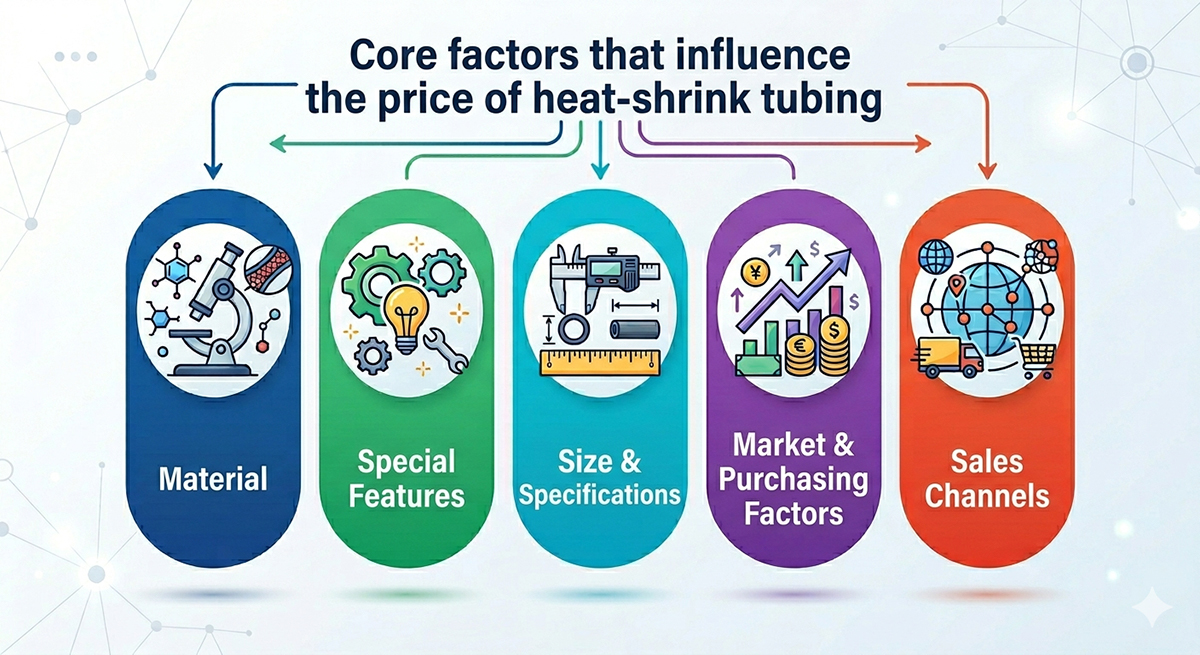
Price of heat shrink tubing mainly depends on the material, functional design, size specifications, brand certifications, and purchasing channel. Understanding these differences will help you find the most suitable product.
Core factors that influence the price of heat-shrink tubing
1. Material
Material is the fundamental factor that affects cost:
- Polyolefin /PE: The most common and cost-effective option. Suitable for general insulation and wire bundling. (Cost: Low–Medium)
- PVC (Polyvinyl Chloride): Soft, available in bright colors, but has lower heat resistance and environmental performance. (Cost: Low)
- Silicone Rubber: Extremely flexible, high-temperature resistant, and weather-resistant. Suitable for high-temperature environments. (Cost: Medium)
- TEFLON(PTFE/FEP): Excellent high-temperature resistance, chemical resistance, and low friction. Suitable for aerospace, chemical, and other demanding environments. (Cost: High)
- Viton™ (FKM): Premium high-temperature, oil-resistant, and chemical-resistant performance. Commonly used in automotive engines and fuel systems. (Cost: High)
2. Special Features
- Adhesive-lined heat shrink tubing: The inner hot-melt adhesive provides waterproof and moisture-resistant protection; priced higher than single-wall tubing.
- High shrink ratio: The standard 2:1 is the most common; 3:1 and 4:1 accommodate larger size variations but involve more complex manufacturing and higher costs.
- Wall thickness options: Available in thin-wall, medium-wall, and thick-wall versions. Thicker walls offer stronger protection but require more material and therefore cost more.
3.Size&Specifications
- Diameter: Larger tube diameters come with higher unit prices.
- Length & packaging: Short-cut pieces or boxed packaging are convenient for DIY and have the highest unit price; full rolls for industrial use offer the lowest unit cost.
4. Market & Purchasing Factors
- Brand and origin: International manufacturers (such as 3M, TE Connectivity, Raychem, and Panduit) offer high quality and comprehensive certifications, but at a premium price. Taiwanese manufacturers like G-APEX and mainland suppliers are more cost-competitive, but it is important to choose reputable producers.
- Safety certifications: UL, RoHS, REACH, and other compliance certifications increase product value but will also be reflected in the cost.
5. Sales Channels
- Direct purchase from manufacturers: Minimum order quantity (MOQ) are requested; offers the lowest unit price and is suitable for large-scale production.
- Local electronic component stores/hardware stores: Convenient for quick access and emergencies, but selection is limited.
- Large electronic component distributors (resellers): Comprehensive product range and allow small-quantity purchases, but prices are generally higher.
- Online platforms (e.g., Taobao, Alibaba, Amazon): Wide price range; buyer should carefully vet seller reputation.
How to choose the most suitable heat-shrink tubing?
1. Verify the application environment: Is it for indoor or outdoor use? Will it come into contact with water, oil, or chemicals? What is the temperature range? Is flame retardancy required?
2. Measure the object dimensions: Measure the maximum and minimum diameters of the item to determine the shrink ratio and the size before shrinkage.
3. Consider the quantity needed: DIY users can choose retail kits; industrial users are advised to purchase full rolls to reduce cost.
4. Check certifications: Ensure the product meets safety and reliability requirements.
Price of heat-shrink tubing is determined by multiple factors, including material, features, specifications, brand, certifications, and purchasing channel.
The most expensive option is not necessarily the best, and the cheapest may not meet your requirements.
Understanding the underlying cost structure helps you to find the most suitable, cost-effective product for your application.