MENU

How to Choose Heat-shrink Tubing? Is There any Difference in the Heat-shrink Ratio?
When purchasing heat-shrink tubing, you may often see numbers like 2:1, 3:1, or 4:1. These represent the shrink ratio. Different shrink ratios affect the tubing’s shrink range and suitable applications. This article will help you to understand the differences quickly and choose the right product.
What is heat-shrink ratio?
The shrink ratio refers to the ratio of the diameter of the heat-shrink tubing before and after heating.
- 2:1 → The diameter after shrinking is about half of the original
- 3:1 → The diameter after shrinking is about one-third of the original
- 4:1 → The diameter after shrinking is about one-fourth of the original
A larger shrink ratio means a wider coverage range, making it more suitable for cables or connectors with significant size differences.
The most commonly used specifications are 2:1 or 3:1.
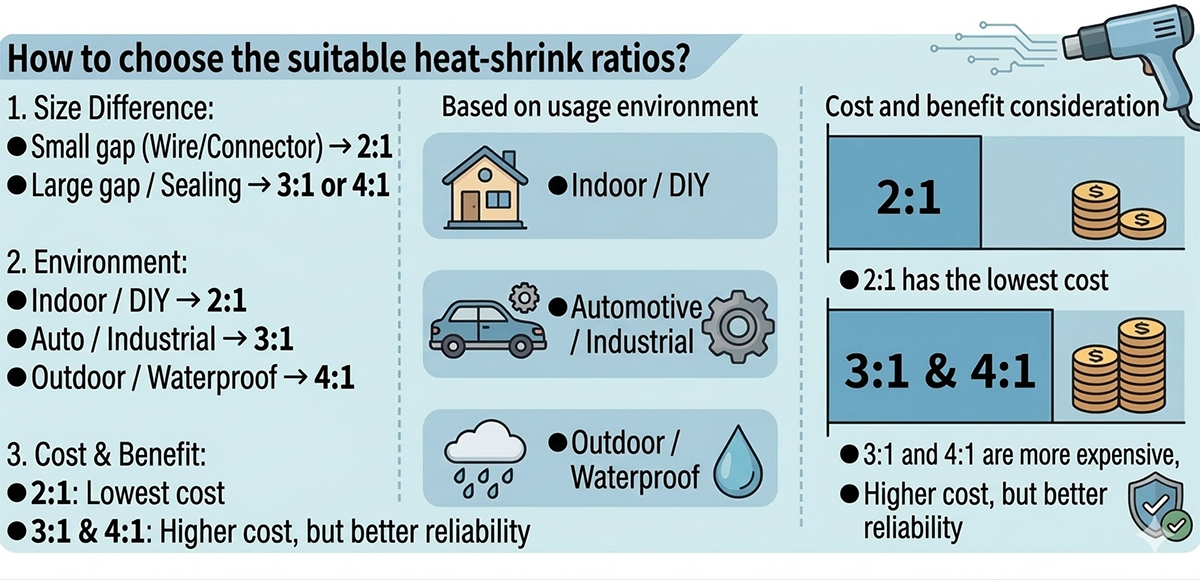
How to choose the suitable heat-shrink ratios?
Choose by the size differences:
- Small difference between wire and connector → 2:1
- Large difference or requires sealing → 3:1 or 4:1
Choose based on the usage environment:
- Indoor electronics, everyday DIY → 2:1
- Automotive or industrial environments → 3:1
- Outdoor, humid areas, or waterproof requirements → 4:1
Cost and benefit considerations:
- 2:1 has the lowest cost
- 3:1 and 4:1 are more expensive, but reduce installation errors and improve reliability
Different heat-shrink ratios represent different shrinking capabilities and application ranges. Choosing the correct shrink ratio can effectively enhance the safety and durability of cables and electronic components.